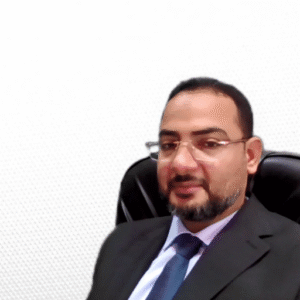
Ahmad Rafiq El-Tahan, PhD
Arabic Literature & Criticism - Philosophy - Quranic Studies
(Arabic Literary Studies through a Philosophical Lens)
**
Over the course of my research career, my work has consistently taken classical Arabic literature as its central focus, while employing philosophical perspectives to illuminate its deeper structures and meanings.
This inquiry builds naturally on my earlier work on the moral dimensions of poetic voice and the epistemological structures in Arabic literary traditions.
This progression reflects a natural broadening of analytical tools rather than a shift in disciplinary identity:
**
1- Epistemology and Literary Production:
My study on al-Thaʿālibī explored how epistemological frameworks—particularly those resonating with Greek Sophistic thought—shape literary composition and thematic development in Arabic prose. Here, philosophy served to reveal patterns inherent in the literary text itself.
**
2- Philosophy of Science and Literary Theory:
In my book on the ṣuʿlaka tradition, I examined how models from the philosophy of science can clarify long-standing interpretive disputes in Arabic literary criticism, thus advancing theoretical approaches within the field.
**
3- Existential Dimensions of Poetic Structure:
My analysis of al-Ṭughrāʾī’s Lāmiyyah identified a fixed existential meaning that organizes the poem’s thematic and structural unity—showing how philosophical inquiry can trace the cohesive fabric of a literary work.
**
4- Meta-Reflection on Arabic Research Practices:
My recent article on Arabic academic research viewed the field itself through the lens of the philosophy of science, highlighting strengths, limitations, and future possibilities in literary scholarship.
**
5- Ethics and Poetic Voice:
In my comparative study of al-Shanfarā, Taʾabbata Sharran, and ʿUrwa ibn al-Ward, I investigated how each poet articulates a distinct moral vision through literary form, thus integrating moral philosophy into literary character analysis.
**
This trajectory shows that my primary identity remains as a scholar of Arabic literature and criticism—philosophy enters my work not as a separate field, but as a set of analytical instruments to deepen the literary investigation.
** ** **
I’m an independent scholar specializing in Classical Arabic literature, rhetoric, and philosophical ethics.
I received my PhD in Ancient Arabic Literary Criticism from Cairo University, with a focus on pre-Islamic poetic theory and the concept of governing meaning (al-maʿnā al-ḥākim).
My research spans Qur’anic semantics, manuscript studies, and epistemological intersections between early Arabic texts and Greek sophistic thought.
I have published several peer-reviewed books and articles in Arabic, including a semantic reanalysis of Ṣaʿlaka as a cultural and rhetorical construct.
My postdoctoral research plan is structured around two interrelated projects: the first examines language as a critical tool for deconstructing ethical normativity by analyzing how linguistic structures function as vehicles for moral meaning; the second investigates the normative content itself, exploring how moral language in philosophical and political discourse can reshape ethical awareness—particularly in contexts such as genocide and systemic violence.
I also bring extensive teaching experience in Arabic and Qur’anic studies to non-native speakers, and have contributed to major lexicographical and manuscript projects in the Arab world.
My interdisciplinary approach aims to synthesize linguistic precision, historical depth, and philosophical inquiry.